
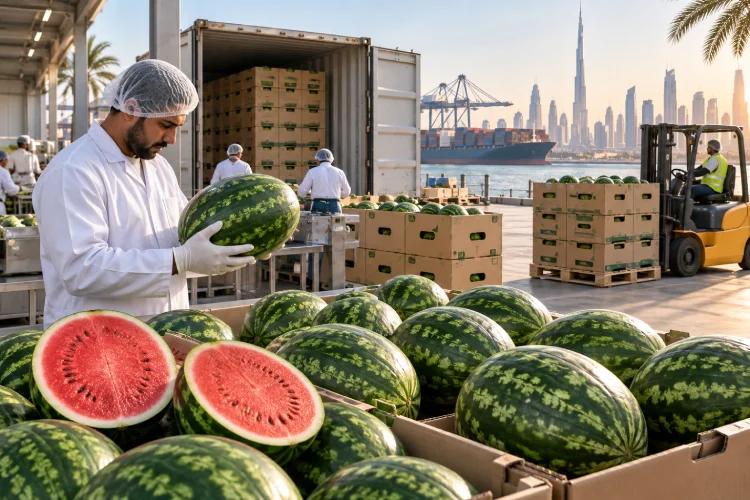
Watermelon can look straightforward from the outside, but purchasing it in commercial quantities requires careful specification. Size, maturity, sweetness, internal colour, rind condition, packaging, and transport planning all influence the value of a shipment after arrival.
When sourcing wholesale watermelon, GCC importers should consider how the fruit will perform throughout the complete supply chain. A watermelon may appear suitable at the farm but still develop problems during loading, transportation, unloading, or distribution if it was harvested at the wrong stage or packed without enough protection.
At Kian Export, we approach watermelon supply from an agricultural perspective. Our experience has shown us that successful orders begin before harvest, when the buyer’s market, required size, delivery schedule, and quality expectations are clearly understood.
Define Your Market Before Placing an Order
A supermarket distributor may require uniform fruit with clean appearance and retail-friendly sizing. Traditional wholesale markets may accept a wider size range, while hotels, restaurants, juice producers, and food-service businesses can have their own requirements.
Before requesting a quotation, clarify:
- Destination country and delivery point
- Intended wholesale, retail, or food-service channel
- Preferred watermelon variety
- Acceptable weight range
- Required skin and flesh characteristics
- Packaging method
- Estimated order quantity
- Expected loading or arrival period
These details help the supplier prepare an offer that reflects the actual requirements of the buyer. A quotation based only on total tonnage does not explain the grade, size distribution, packaging, or commercial condition of the fruit.
Kian Export supplies carefully selected fresh watermelon for importers, wholesalers, and distributors across GCC markets.
How to Specify Wholesale Watermelon Size and Weight
Watermelon size is one of the first points to confirm with a supplier. Buyers may specify the fruit by individual weight range, approximate count per package, or the number of pieces expected in the complete shipment.
There is no single ideal size for every GCC market. Smaller fruit may be more practical for household retail, while larger watermelon can be suitable for wholesale markets, food-service operations, and buyers serving large families. Demand may also change according to season, local consumption habits, and retail pricing.
Uniformity is particularly important. When one load contains a large variation in fruit weight, distributors may need to separate the shipment into several categories after arrival. This adds handling time and can make pricing more difficult.
A clear order specification could state, for example, the preferred weight range and an acceptable percentage of fruit outside that range. Both parties should agree on how the fruit will be weighed and how size tolerance will be assessed before loading.
Check Maturity, Sweetness, and Internal Quality
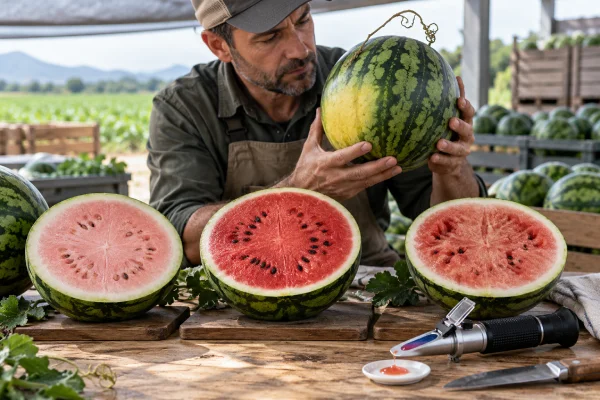
External appearance alone cannot confirm watermelon quality. Importers are ultimately buying the condition of the flesh, including its colour, texture, juiciness, sweetness, and freedom from internal defects.
Harvest timing has a direct effect on these qualities. Watermelon does not continue developing sweetness in the same way as some fruits after harvest. Fruit picked too early may have pale flesh and weak flavour, while overmature fruit may lose firmness and perform poorly during transportation.
When purchasing wholesale watermelon, buyers should ask how the supplier checks maturity before harvest. Field experience, crop age, rind characteristics, ground spot development, tendril condition, and sample cutting can all contribute to the selection decision.
For larger orders, representative fruit should be cut and inspected close to the loading date. Buyers may request current photos or videos showing the rind, flesh colour, seed condition, and internal texture. If sweetness is part of the agreed specification, the measurement method and acceptable range should also be defined clearly.
Evaluate the External Condition
The rind protects the fruit during handling and transport, so external quality remains important even when the internal flesh is the main concern.
Watermelons prepared for export should be checked for:
- Cuts and punctures
- Deep scratches
- Cracks or splitting
- Severe bruising
- Sunburn
- Pressure damage
- Signs of decay
- Pest or disease damage
- Abnormal shape
- Excessive dirt or surface contamination
Minor cosmetic marks may be commercially acceptable in some wholesale channels, provided they do not affect the rind’s protective function or the fruit’s internal quality. The buyer and supplier should agree on acceptable tolerances instead of relying only on general descriptions such as “premium grade.”
Choose Suitable Packaging for GCC Shipments
Packaging requirements depend on fruit size, transport method, unloading facilities, and buyer preference. Watermelons may be shipped in reinforced cartons, large bins, palletised formats, or other arrangements designed for bulk produce.
Good packaging should limit uncontrolled movement while avoiding excessive pressure on the fruit. It must also remain stable during loading, transportation, and unloading. Weak packaging, poor stacking, or overfilled containers can cause bruising, compression, and rind damage.
For wholesale watermelon, importers should confirm:
- Packaging type and material
- Number of fruits per package
- Approximate net and gross weight
- Pallet dimensions, when applicable
- Number of packages per pallet
- Protective materials used between layers
- Loading arrangement
- Required labels and carton markings
The offer should explain whether packaging and pallets are included in the quoted price. These details affect the buyer’s landed cost, storage planning, unloading method, and available warehouse space.
Buyers sourcing several agricultural products can also review our complete fresh produce collection, which includes tomato, melon, cantaloupe, and sweet corn.

Plan Handling and Transportation Carefully
Watermelon is heavy, but its rind can still be damaged by impact, vibration, excessive stacking pressure, and rough unloading. Once the rind is cracked or deeply bruised, product value can fall quickly.
Fruit should be handled carefully from harvesting through final loading. Throwing, dropping, or rolling watermelons from height can create damage that may not be immediately visible. Proper support between layers and stable loading help reduce movement during transport.
Temperature planning should reflect the fruit condition, route, journey duration, and buyer’s receiving process. The supplier, buyer, and logistics provider should agree on the shipment plan before loading. Long delays at origin or destination can affect quality even when the fruit left the farm in good condition.
The buyer should also prepare the receiving warehouse in advance. A shipment may experience avoidable damage if unloading is delayed or if the receiving team does not have the correct labour and equipment available.
Compare the Complete Offer, Not Only the Price per Ton
A low price does not always mean a lower purchasing cost. Size inconsistency, weak packaging, internal defects, poor maturity, or high levels of damaged fruit can reduce the saleable quantity after arrival.
When comparing quotations for wholesale watermelon, examine:
- Product variety
- Origin and harvest period
- Agreed weight range
- Quality grade and tolerances
- Packaging specifications
- Net product quantity
- Loading capacity
- Incoterm and delivery point
- Payment conditions
- Inspection arrangements
- Required export documents
- Estimated loading schedule
Two quotations may appear similar while representing different quantities of saleable fruit or different levels of supplier responsibility. The complete commercial specification should therefore be reviewed before an order is confirmed.
What to Include in Your Purchase Enquiry
A structured enquiry helps the supplier respond quickly and reduces repeated questions. GCC importers should provide the following information:
- Destination country, city, and port or border point
- Required watermelon variety
- Preferred weight range
- Required quantity
- Acceptable maturity and internal colour
- Sweetness requirement, if applicable
- Packaging preference
- Labelling requirements
- Preferred Incoterm
- Target loading or arrival date
- Inspection requirements
- Required certificates and shipping documents
Buyers should also ask for recent product and packing images. Photographs from another farm, season, or shipment may not represent the fruit available for the current order.
Selecting a Reliable Watermelon Supplier for the GCC
A reliable supplier should understand both agricultural production and export preparation. Watermelon quality begins in the field, so direct knowledge of cultivation, harvest timing, and crop condition helps the supplier make better selection decisions.
Kian Export has more than 15 years of agricultural experience and works directly with farms and trusted growers. Our farm-based supply approach gives us closer control over cultivation monitoring, harvest selection, grading, and preparation for international buyers.
Clear communication is equally important. The supplier should document the agreed specifications, provide current information about product availability, and discuss any change before loading. Fresh produce conditions can vary, so transparent updates help buyers make informed decisions.
Request a Wholesale Watermelon Quote
Kian Export supplies Iranian watermelon to professional buyers across GCC markets. We support importers, wholesalers, and distributors with product selection, export preparation, packaging coordination, and shipment planning based on their destination requirements.
If you are looking for wholesale watermelon, send us your required variety, weight range, quantity, packaging preference, destination, Incoterm, and delivery period. Our team will review your enquiry and prepare a relevant supply proposal.
Contact Kian Export to request a watermelon export quote.